In this hookup guide, we'll connect our sensor up to our Esp32 Thing Plus microcontroller and run a of quick (Qwiic) example to get you up and running with this fantastic board!
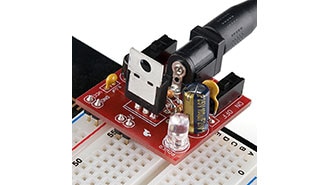
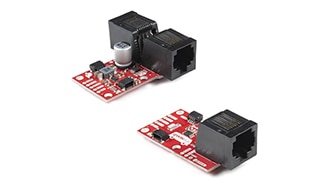
The PCA9306 is a dual bi-directional voltage translator for the I2C-bus and SMBus. It works at a range of voltages between 1.2V and 5.0V and doesn't require a direction pin to function. This is a great board for shifting voltages between sensors and your microcontroller.
This tutorial covers how to get CO2 and other environmental readings from the STC31 using both Arduino and MicroPython when connecting the CO2 Sensor Breakout to a compatible development board over Qwiic.
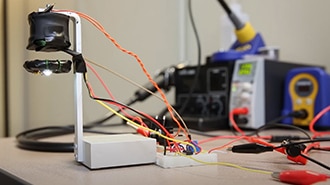
In this tutorial we'll build a basic magnetic levitator. This guide will go over some of the theory, how to use a magnetic field sensor, and how to use one to build a basic levitation circuit.
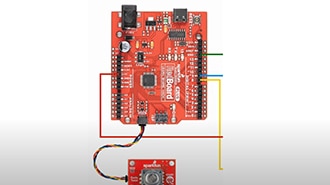
In this tutorial, we'll walk you through using the SparkFun Audio Player Breakout in combination with the Qwiic Twist to let you select and play tracks from a microSD card. It's a compact and powerful way to add audio interactivity to your prototype using simple I2C and serial connections.
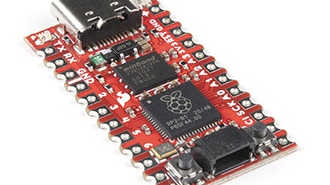
The Pro Micro RP2040 is a low-cost, high-performance board with flexible digital interfaces featuring the Raspberry Pi Foundation's RP2040 microcontroller. The board uses well known Pro Micro footprint with castellated mounting holes.
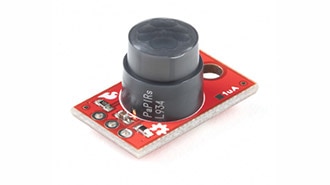
Looking to add some motion detection to a project you are working on? The SparkFun PIR Breakout - 170uA (EKMC4607112K) and SparkFun PIR Breakout - 1uA (EKMB1107112) might be just the thing!


 设置
设置
 快速交货
快速交货
 免运费
免运费
 国际贸易术语
 支付类型
支付类型


 市场产品
市场产品