Designs (4)

The bq25504 is the first of a new family of intelligent integrated energy harvesting Nano-Power management solutions that are well suited for meeting the special needs of ultra-low power applications. The product is specifically designed to efficiently acquire and manage the microwatts (µW) to miliwatts (mW) of power generated from a variety of DC sources like photovoltaic (solar) or thermal elec…

The DC2042A is a versatile energy harvesting demo board that is capable of accepting piezoelectric, solar, 4mA to 20mA loops, thermal-powered energy sources or any high impedance AC or DC source.
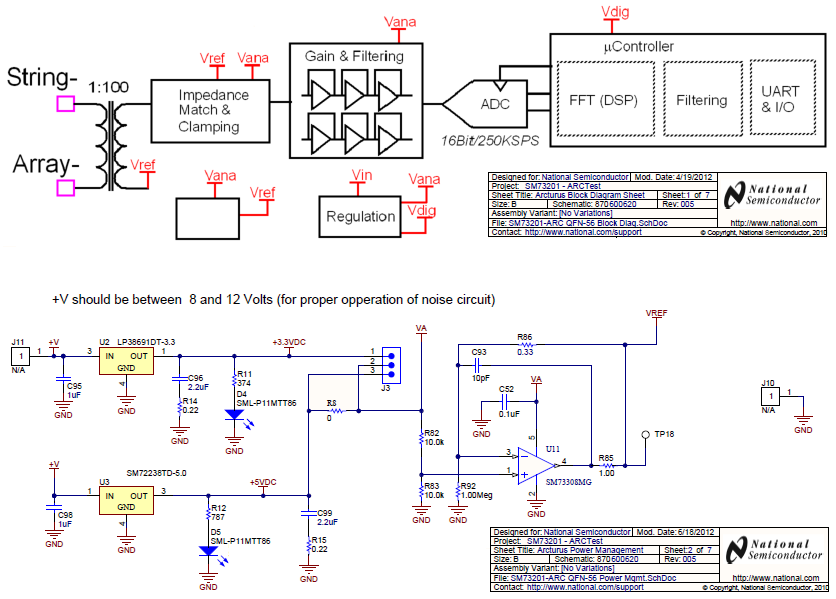
The SolarMagic™ reference design kit RD-195 includes the SM73201-ARC-EV PCB which is a UL1699B compliant Photo-Voltaic Arc Detect System with a minimal footprint of less than 50mm x 30mm. The reference design utilizes National Semiconductor’s advanced Analog technology along with an innovative dynamic filtering technique to effectively detect the signature of Arcing conductors in the presence of …

Demonstration Circuit 1582B featuring the LTC3108 is a highly integrated DC/DC converter optimized for harvesting and managing energy from extremely low input voltage sources such as thermoelectric generators (TEG). The step-up topology operates from input voltages as low as 20mV.